A debate on Management of Change

Recently a group of safety yahoos got together to discuss a situation:

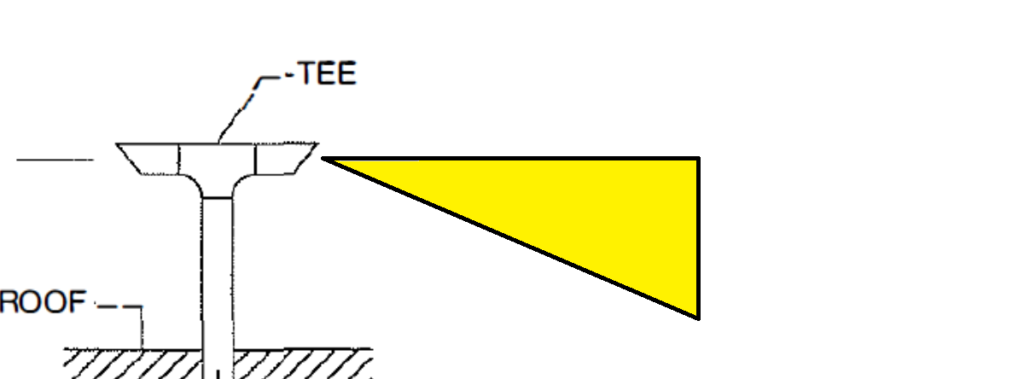
You have a freezer with racking. The racking needs to be removed for XXXX reason. You hire a contractor to do the job. You evaluate and train the contractor as a PSM Contractor. In the midst of removing the racking, the contractor strikes some NH3 piping with a forklift and cause a NH3 release. NOTE: the piping in this scenario is 18″ above the rack and against the wall and ceiling, but not protected in anyway and the driver of the forklift was trained for the forklift he was operating. The racks were used to store products that were handled by hand – not by forklift, so the forklift being used to remove the racks is only in the freezer to install and remove racking.

One of us posted this to the LinkedIn forums and promised each other not to comment on it until the conversation ran it’s course. There seems to be two camps: the Non-MOC camp is best represented by Bryan Haywood of SAFTENG.net. What follows is my response to that camp:

“The major objective of process safety management of highly hazardous chemicals is to prevent unwanted releases of hazardous chemicals especially into locations which could expose employees and others to serious hazards. An effective process safety management program requires a systematic approach to evaluating the whole process. Using this approach the process design, process technology, operational and maintenance activities and procedures, nonroutine activities and procedures, emergency preparedness plans and procedures, training programs, and other elements which impact the process are all considered in the evaluation. The various lines of defense that have been incorporated into the design and operation of the process to prevent or mitigate the release of hazardous chemicals need to be evaluated and strengthened to assure their effectiveness at each level. Process safety management is the proactive identification, evaluation and mitigation or prevention of chemical releases that could occur as a result of failures in process, procedures or equipment.” –Appendix C to §1910.119 (non-mandatory)

In the scenario we’ve been discussing I keep going back to the intent of the standard. When we brought this situation up for discussion it was because it’s one of those odd-ball situations where your gut instinct tends to lead you in the wrong direction. Upon reflection, I think there are many ways to address the issues that this situation poses. What follows is one way of dealing with the situation that I feel fits within a properly implemented Ammonia refrigeration PSM program that meets the modern understanding of what Process Safety Management entails.

First, the area in question is a refrigerated space with a small evaporator and its required piping and valving. If we were to build this today we’d likely place the unit in a penthouse or provide some alternative means of protection. Unfortunately, the vast majority of us deal with legacy systems that were designed with criteria that did not exactly place safety on the top of the list. We have to deal with the systems we have – not the ones we wish we have.

In this case the evaporator is against a wall behind some manually loaded racking. This is fairly common for ingredient rooms in Ice Cream plants and other such facilities. The air unit is well out of the way of where a worker can affect it and the rack itself actually provides a barrier to reaching the air unit with a manual pallet jack. Maintenance workers use a ladder to reach it for servicing. At some point in the facilities history a good deal of time, money and brain-power went into the PHA. The members of that PHA team analyzed the hazards of the process and the hazards around the process that could affect it. In the section of the PHA dealing with this room, there was a question about “Struck by” hazards. The team reasoned that there was never an intention of placing PIT (powered industrial trucks) in the space so the PHA did not consider it a credible hazard. But there were safeguards in place as well: There was a policy on forklift use and there were signs in place saying “No Forklifts.” More importantly there was no need to take a forklift in the area because due to space constraints it was easier to push a manual pallet jack in for the rare large load of flavorings that needed to go into the space.

I like to repeat the wise words of Trevor Kletz about 20 times each PSM class: “Institutions have no memory, only people have memories.” This is important because at some point people change, move on, get fired or promoted and eventually the only institutional knowledge of why forklifts weren’t allowed in the space, and why the situation was acceptable is enshrined in the Process Hazard Analysis or PHA.

To reiterate – the only memory of the hazards and safeguards in place is in a document that most people operating or maintaining the system will ever read, let alone become so familiar with that they can actively understand the hazards and safeguards present without referring to it: the PHA.

When the change of racking in the space was considered – or indeed any change takes place on or near a covered process – I like to ask the following question at the facility’s PSM meeting: To what extent can this change affect, or be affected by the process? While this differs from the usual practice of how most PSM implementers decide whether or not a MOC is required, I believe it is in keeping with the language of the standard:

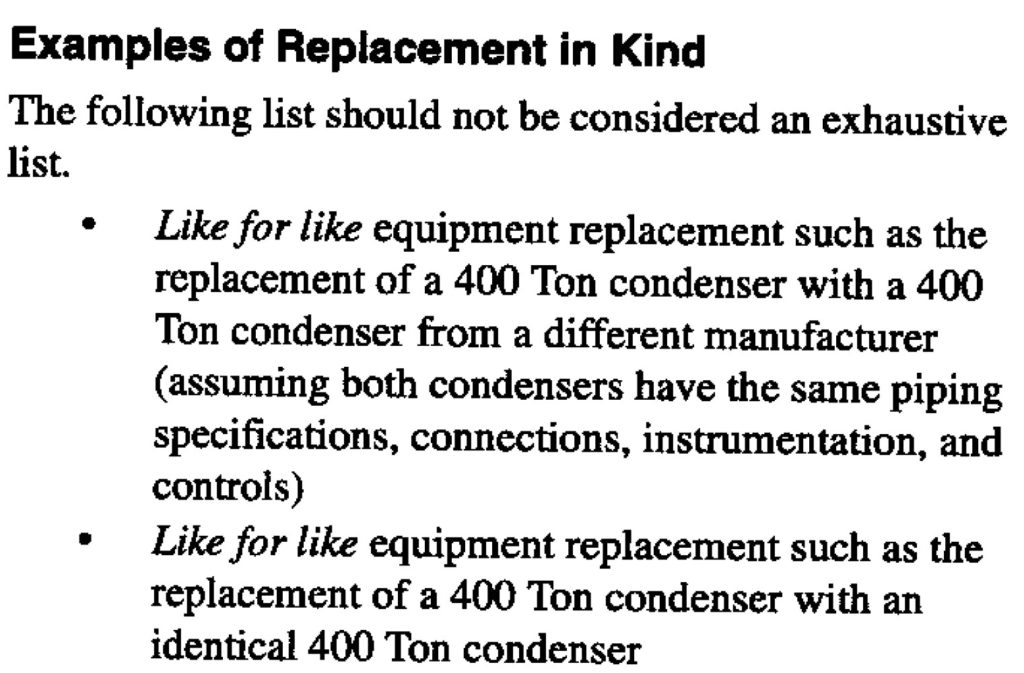
1910.119(l)(1) – The employer shall establish and implement written procedures to manage changes (except for “replacements in kind”) to process chemicals, technology, equipment, and procedures; and, changes to facilities that affect a covered process.

It’s that last bit – “changes to facilities that affect a covered process” – that makes me want to perform a Management of Change. Perhaps your gut instinct tells you that the change (as it’s envisioned) would not affect the process. Surely, if the change in this case was carried out correctly I think we would all agree it would not have. I’ll quote from the OSHA compliance guidance given in CPL 03-00-004 (the Refinery PSM NEP):

A MOC procedure is a proactive management system tool used in part to determine if a change might result in safety and health impacts. OSHA’s MOC requirement is prospective. The standard requires that a MOC procedure be completed, regardless of whether any safety and health impacts will actually be realized by the change. The intent is, in part, to have the employer analyze any potential safety and health impacts of a change prior to its implementation. Even if the employer rightly concludes there would be no safety and health impacts related to a change, 1910.119(l)(1) still requires the employer to conduct the MOC procedure.

As part of my PSM team’s discussion we’d look at the PHA for the area in question. Were there any identified hazards and safeguards? There was no credible struck by hazard because there were no forklifts. Well, we’re about to change that right? Every safeguard we identified is also being thrown out the window. To my mind there is no doubt: This is a change, and the change can affect the safety of my process.

I’m not sure how your MOC procedures work in practice, but I know that this entire conversation that I’ve described above can take place in less than 15 minutes. I also know that the safeguards we decide upon will be fairly easy to design, implement and document. I wouldn’t think that the entire process would take over a half an hour.

In your article you discuss the threat of “drowning in paperwork of little or no value”, but a MOC isn’t paperwork. A MOC is an analysis of a change and it’s affect on the system that is documented on paper. We do safety a great disservice when we confuse the form with the function. If I may quote from GCAP’s training manual on the MOC element:

“No single form can work for every type of change to the system. While a form can be used as guidance on conducting a management of change, it is only meant to document the change – not to manage it. Managing a change is no less complex than managing a shop floor or a warehouse; you might be able to document that you did it on a form, but no form can tell you how to make the hundreds of decisions required of management on a daily basis.”

We are free to document that we managed the change in any way that meets the requirements of the standard. Every bit of the discussion in this article on the nature of the change and its impact would have occurred in a safe facility with a PSM program – all I am saying is that since we are already doing the work, we might as well document it as a MOC and take credit for the work!

You also mention in your article that there are other ways of dealing with this change. I agree completely – there are many ways to handle it safely. In my opinion though, there is only one compliant way to handle it in a PSM covered process on the small scale most Ammonia refrigeration systems operate on.  Why use a different tool when we already have one designed to manage changes that we are already familiar implementing?

Posted in Contractors, General Information, Incidents, Management of Change, NEP, Standardization, System Optimization | Tagged , , , , , | Leave a comment

No NH3 Detection – General Duty Citation in store?

Most General Duty citations have nothing to do with Ammonia refrigeration but I’ve started to see a trend recently where processes that are not covered by PSM are being subject to Recognized and Generally Accepted Good Engineering Practices (RAGAGEP). The example below is from an organic poultry processor in Georgia:

General Duty Citation for lacking Ammonia Detection

Even though this company had less than the threshold quantity required for Process Safety Management programs (10,000 pounds for Anhydrous Ammonia) you see they have a General Duty to furnish a place of employment that was free from recognized hazards. Ammonia is a hazard that is generally recognized and an Ammonia detector is a Recognized and Generally Accepted Good Engineering Practice.
You can look up the full citation on OSHA’s website.
Posted in Compliance, General Information | Tagged , , , | Leave a comment

Website Availability of Non-OCA RMP Data

Email from the EPA:

.

As you know, EPA regulates certain hazardous chemical facilities under 40 CFR Part 68 – known as the EPA Chemical Accident Prevention or Risk Management Plan (RMP) program.  EPA is aware that state and local communities are major stakeholders in the RMP program, and as such the Agency would like to alert you to a step we are taking to improve the efficiency of this program.

Current EPA plans call for the re-establishment of Internet access to the non Off-site Consequence Analysis (OCA) sections of the RMP database beginning in July of 2012.

Under the Risk Management Plan program, hazardous chemical facilities must submit RMPs to EPA. The Agency maintains a national electronic database of RMPs, and that database currently includes plans from approximately 13,000 active RMP facilities.

EPA identifies two categories of information contained within or derived from RMPs. These are:

* Off-site Consequence Analysis (OCA) information, which includes the portions of RMPs that describe a regulated facility’s worst-case release scenario(s) and alternative (more likely) release scenarios, and also includes any statewide or national facility rankings developed by EPA which is derived from this information
* Non-OCA information, which includes the remaining portions of RMPs, including facility registration information, information about the history of serious accidental releases at the facility, information about the facility’s accident prevention and emergency response programs, and an executive summary

Under the law, public access to OCA information is very limited. In August 1999, the President signed Public Law 106-40, the Chemical Safety Information, Site Security, and Fuels Regulatory Relief Act (CSISSFRRA). Among other things, CSISSFRRA responded to concerns over the sensitivity of OCA information by restricting public access to the information and requiring EPA and the Department of Justice (DOJ) to publish regulations establishing methods for public access to OCA information that would minimize the risk of its criminal use. CSISSFRRA, and subsequent regulations enacting it (40 CFR Chapter IV), provide full OCA information access only to “covered persons” – including Federal, State, and local government officials, their agents or contractors, and other specified individuals with an official need for the information. CSISSFRRA prohibits covered persons from disclosing to the public OCA information, including statewide or national rankings derived from OCA information, except in certain circumstances.

The law and its implementing regulations do allow members of the public limited access to OCA information in designated Federal reading rooms, which are usually located in EPA Regional Offices or Department of Justice offices in each state.   Additionally, owners of covered facilities may make their facility’s OCA information available to the public, but are not required to do so.

On the other hand, there are no legal restrictions on the distribution of non-OCA RMP information.  In late 1999, shortly after the RMP regulation went into effect, EPA made non-OCA RMP information available to the public via the Agency’s Internet website. However, after the terrorist attacks of September 11, 2001, EPA made a voluntary decision to remove all RMP data from the Agency website.  Since that time, members of the public desiring access to current non-OCA RMP information from EPA must either visit a Federal reading room, or send a Freedom of Information Act (FOIA) request to the Agency. As an Agency, we have received repeated FOIA requests for access to the non-OCA portions of RMPs that we are compelled to grant. Thus, the failure to have the non-OCA portions of the RMP database accessible through EPA’s website has led to bureaucratic burden on the requesters and the Agency without any significant additional protection of the information.

EPA is now planning to once again make the non-OCA portion of the RMP national database available to the general public via the Agency’s website.  The Agency believes that restoring public access to this information may be very useful to members of the public and most significantly, will ease access to essential information for critically important public sector EPA partners such as police, fire fighters, medical emergency responders, emergency management planners, State Emergency Response Commissions (SERCs), and Local Emergency Planning Commissions (LEPCs).

For example, we believe that access to non-OCA RMP data via the EPA website will be useful to the FBI as it seeks to maximize the effects of outreach programs and to successfully engage potential partners in the national effort to combat terrorism; to DHS Chemical Security planners seeking to evaluate the scope and penetration of their programs, both voluntary and regulatory; to agencies evaluating risk analytic processes, critical infrastructure: in short, myriad partners in the national preparedness effort.  In such cases, the streamlined access afforded by a public access website should prove to be a major step forward in efficiency.   We are especially confident that a simple access system will be very effective in restoring access to this type of information to our non-federal preparedness and response partners.

Please Note – Access to OCA information will continue to be restricted in accordance with CSISSFRRA and 40 CFR Chapter IV.

Current EPA plans call for Internet access to the non-OCA sections of the RMP database to be activated in July 2012.  Prior to that time, we would like to obtain feedback from our stakeholders and address any questions or concerns that you may have.  If you have any questions concerning EPA’s decision or plans to make RMP non-OCA information available via the Internet, or would like more information, please contact EPA’s Office of Emergency Management, at 202-564-8600 or by email at stanton.larry@epa.gov, or to our Deputy Director, Dana Tulis, at dana.tulis@epa.gov

Thank you.

Lawrence M. Stanton, Director
Office of Emergency Management
Office of Solid Waste and Emergency Response
US Environmental Protection Agency

All of this NON-OCA information is already available (although a few months out of date) at http://rtknet.org/db/rmp. The only difference when this goes into effect is that the information will be immediately updated on the web once this new site goes live.

Posted in Community Involvement, General Information | Tagged , | Leave a comment

PSM Covered Chemical Facilities National Emphasis Program goes NATIONWIDE!

OSHA promulgated the PSM standard in 1992 in response to a number of catastrophic incidents that occurred worldwide (See Process Safety Management of Highly Hazardous Chemicals, 29 CFR 1910.119).  These incidents spurred broad recognition that releases of highly hazardous chemicals could lead to incidents that may occur relatively infrequently, but, due to their catastrophic nature, often result in multiple injuries and fatalities.

.

On September 13, 1994, OSHA issued Instruction CPL 02-02-045, Process Safety Management of Highly Hazardous Chemicals – Compliance Guidelines and Enforcement Procedures.  This instruction established policies, procedures, clarifications, and compliance guidance for enforcement of the PSM standard.  The instruction acknowledged that Program Quality Verification (PQV) inspections were resource intensive, and, therefore, OSHA would perform only a limited number each year.

.

Consequently, very few PQV inspections have been conducted since Instruction CPL 02-02-045 was issued in 1994.

.

In July 2009, OSHA implemented a pilot NEP for PSM-covered chemical facilities.  The pilot outlined a new approach for inspecting PSM-covered facilities that allowed for a greater number of inspections using better allocation of OSHA resources.  Under the pilot, OSHA was able to increase the number of PSM facilities inspected with relatively limited resources.

.

Based on data collected and feedback from OSHA personnel, this Instruction outlines a slightly modified Chemical NEP that will be launched OSHA-wide…

.
This Instruction expands the PSM-Covered Chemical Plants National Emphasis Program nationwide to all OSHA Regions and State Plans.

  • Facility categories have been reduced from three in the pilot NEP to two: facilities likely to have ammonia used for refrigeration as the only Highly Hazardous Chemical (HHC) and all other facilities.
  • The number of programmed inspections required per Area Office has been reduced.
  • Significant industry and/or OSHA experience has been recognized for CSHO qualifications to conduct PSM inspections.
  • A requirement to verify abatement of previous OSHA PSM citations has been added.
  • Instructions for preparing targeting lists have been clarified, and program evaluation requirements have been reduced.
.

You can read the directive CPL 03-00-01 here.

Other than the above changes it’s the same as it has been for the past two years. I’d suggest you schedule yourself for an NEP level PSM course in the near future. Reading the questions in the refinery PSM NEP are a good way to get yourself oriented towards the current view of acceptable PSM implementation.

The NEP is focused on PSM Ammonia Refrigeration Systems as Category 1 facilities and non-refrigeration Ammonia and other non-refinery PSM covered facilities as Category 2.

Posted in Compliance, NEP | Tagged , , | Leave a comment

Torque Wrenches for Ammonia refrigeration valves

Yes, it really has come to this. Let’s start with a single citation…

What equipment could this citation be concerning? Take a look at the compliance officer’s narrative:

The officer went on to say in the OSHA 1-B Inspection worksheet:

All valves with flange bolts (Hansen/Parker Hanafin) used in the covered process need to be torqued with a torque wrench consistent with the manufacturer’s specification and their RAGAGEP. Although the FACILITY contracts out the Mechanical Integrity work to CONTRACTOR the FACILITY did not have the specific language in the contract or a way to ensure that valves are torqued properly. Improperly installed flange bolts that aren’t torques properly may result in a release of a highly hazardous chemical such as ammonia.

This may sound absurd to many with experience in the Ammonia industry, but don’t take this lightly: I am aware of at least four facilities that have been cited for not using torque wrenches for flanged valve installation. I am also aware of at least one repeat citation for $25,000! Once something like this has been established, you can expect to see it over and over again.
.
Both the RAGAGEP (IIAR) and the PSM/RMP regulations say we should install equipment in accordance with the manufacturer’s recommendations. When the manufacturer includes “published torque specifications”, we have no choice but to follow them.
.
For reference: Parker and Hansen
.
I‘ll quote Hansen: “For proper sealing, gaskets should be lightly oiled and all bolts must be tightened evenly to published torque specifications”
Posted in Compliance, Mechanical Integrity, Oddities | Tagged , , , | Leave a comment

Trevor Kletz on “macho culture” in the PSM regulated world

If you are unfamiliar with Trevor Kletz, to the PSM world he’s the equivalent of what Elvis was to Rock ‘n’ Roll…

“Many workers don’t see the need to follow all the rules or the permit-to-work procedures… Our job, they say, is to get stuck in and get the job done, not fill in forms. In time this macho approach becomes the local custom and practice… It’s easy to point the finger at the management and assume that a culture of cutting corners started at the top. It is worth remembering that the same culture can also originate at the bottom, driven by the desire to get the job done. The task of management is to know this and make sure it’s done properly.” –Trevor Kletz

How many times have you heard “I’m a refrigeration tech, not a secretary” in regards to PSM paperwork? We need to work harder to convince our technicians that doing things the PSM way *is* doing things the right way. If the PSM way takes a bit longer – so be it. It’s much more important that they get the job done SAFELY than that they get the job done in the smallest amount of time!

Posted in General Information, Oddities | Tagged , | Leave a comment

OSHA cites Kraft in Madison Wisconsin

MADISON, Wis. – The U.S. Department of Labor’s Occupational Safety and Health Administration has cited Kraft Foods Inc. for 12 serious and one other-than-serious safety violation at a facility of its subsidiary, Oscar Meyer, in Madison. Proposed fines total $75,000. –OSHA

You can read the actual citations right here.

There are some things in this citation I’ve been talking about for a while now – things that generally lead to very heated conversations! Here are two of them:

P&ID accuracy REALLY does matter!

As for the next item – let’s consider it a “shot across the bow” to the industry:

The next time this comes up at any Kraft facility it can be considered a Repeat or Willful citation with a penalty cap of $70,000!

Do your Management of Change procedures cover changes to key personnel? They certainly should, shouldn’t they?

Posted in Compliance, Management of Change | Tagged , | Leave a comment

On my way to the RETA conference in Greensboro, North Carolina

Hopefully I’ll run into some of you there!

Posted in General Information | Leave a comment

Bostik Fines – Following up on Audit Recommendations MATTERS!

BOSTON – The U.S. Department of Labor’s Occupational Safety and Health Administration has cited Bostik Inc. for 50 alleged violations of workplace safety standards following a March 13 explosion at the company’s Middleton plant in which four workers were injured. The adhesives manufacturer faces a total of $917,000 in proposed fines.

OSHA’s inspection identified several serious deficiencies in the company’s process safety management program, a detailed set of requirements and procedures employers must follow to proactively address hazards associated with processes and equipment that involve large amounts of hazardous chemicals…

…”In this case, Bostik knew from prior third party and internal compliance audits conducted at the plant that aspects of its PSM program were incomplete or inadequate, and misclassified electrical equipment was in use. The company did not take adequate steps to address those conditions” OSHA

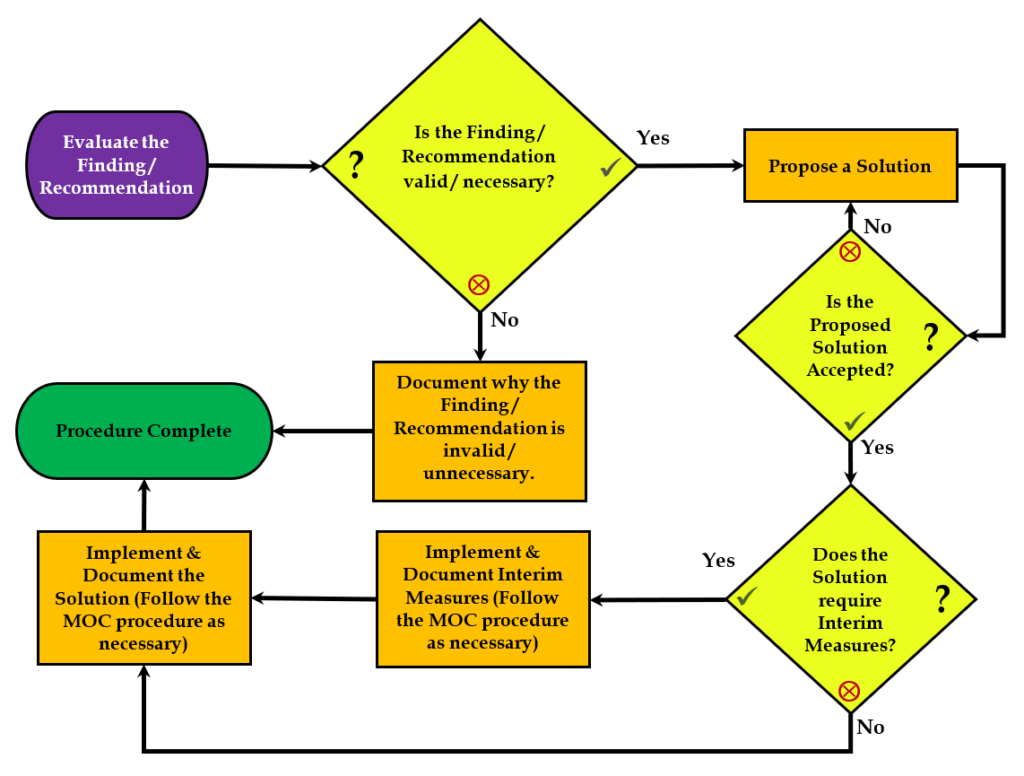
Do YOU have open recommendations from previous compliance audits, PHA’s, Incident Investigations or other sources?

The ventilation system in your compressor room is likely using the ANSI/ASHRAE 15 exception to the NEC. What this means is that as long as your ventilation system conforms to ANSI/ASHRAE 15 you do not need to classify your engine room as a Class 1 Division 2 space – so you don’t need explosion proof electronics. If your ventilation system does NOT conform to ANSI/ASHRAE 15 then you do have to have all your electronics classified for a Class 1 Division 2 space.

If you look at the first portion of the actual citation in this case you will find that there is $350,000 worth of fines for incorrectly classified electrical equipment. There is plenty more to learn from this document; some highlights include:

  • Using non-classified radios and cellphones in classified spaces
  • Lack of training for the Hazmat Team
  • Emergency Response Plan was inadequate
  • Lack of training on Respirators and other Response Gear

We’ll take a look at the second section of the fines in another post.

Posted in Community Involvement, Compliance, Incidents, Mechanical Integrity | Tagged , , , | Leave a comment

A Note on Blog Subscriptions

Quite a few people have signed up for emails when new posts are made via the BlogSubscriptions link.

You may wish to make sure you place bchapin@taocompliance on your safe sender list or the email has a good chance of being trashed as spam. I get about 20 of these failure notices from VersaCold alone every post!

Posted in General Information | Leave a comment